Understanding Dyslexia
An evidence‑based resource on dyslexia — a specific learning disability affecting word reading and spelling — for parents, teachers, and dyslexic readers themselves.
Last updated: 24 October 2026 · reflects the International Dyslexia Association's October 2025 definition
What Is Dyslexia?
Dyslexia is a specific learning disability characterised by difficulties with word reading and/or spelling that affect accuracy, speed, or both, and that vary depending on the writing system (orthography). These difficulties occur along a continuum of severity and persist even with instruction that is effective for a person's peers. Its development reflects interacting genetic, neurobiological, and environmental influences, and underlying difficulties with phonological and morphological processing are common but not universal.[1] This framing follows the International Dyslexia Association's definition, revised in October 2025 (superseding the widely used 2002 definition[11]), and the peer-reviewed paper documenting it.[1]
Dyslexia has been reported in every culture and language studied, with converging evidence for shared neurobiological and neurocognitive bases across writing systems.[2] In diagnostic systems it falls under Specific Learning Disorder with impairment in reading (DSM-5-TR).[9]
What dyslexia is not. Dyslexia is not a problem of intelligence — it occurs across the full range of ability, and many dyslexic people are highly capable thinkers.[3] It is not caused by poor eyesight or by "seeing letters backwards" as a visual defect; the core difficulty is in language processing, not vision.[4] And it is not the result of laziness or inadequate effort. It is also not simply a lack of teaching — though inadequate instruction can cause reading difficulty, dyslexia persists even with good teaching and requires targeted, structured intervention.[4]
Dyslexia is a specific learning disability characterized by difficulties in word reading and/or spelling that involve accuracy, speed, or both and vary depending on the orthography. These difficulties occur along a continuum of severity and persist even with instruction that is effective for the individual's peers. The causes of dyslexia are complex and involve combinations of genetic, neurobiological, and environmental influences that interact throughout development. Underlying difficulties with phonological and morphological processing are common but not universal…
The Phonological Core
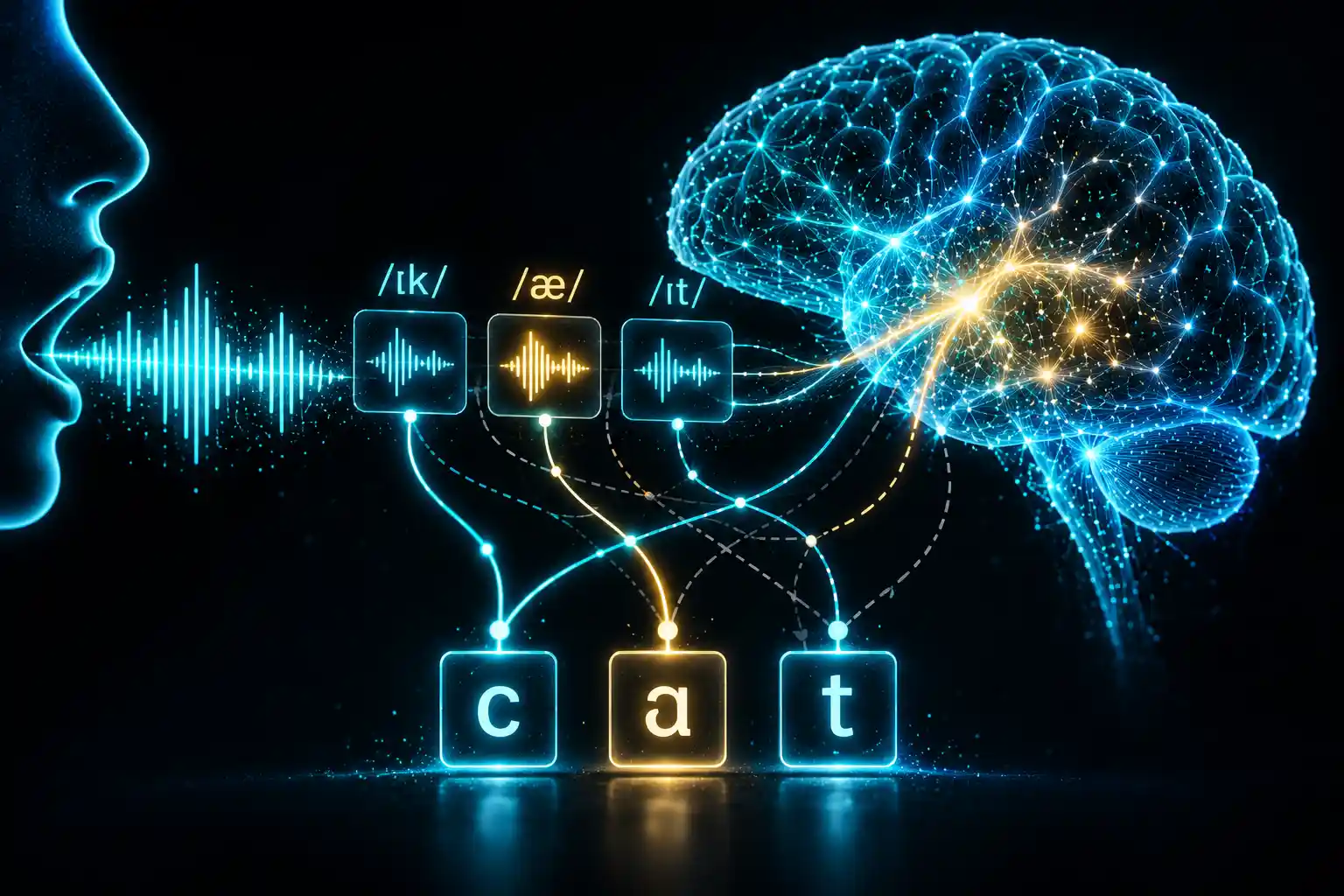
Learning to read an alphabetic language requires phonological awareness: the insight that spoken words can be broken down into smaller sound units (phonemes), which the letters of the alphabet represent. A child must learn to map those letters onto sounds and blend them back into words — the skill of decoding. In dyslexia, this phonological system often works less efficiently, so building accurate, automatic word recognition is effortful and slow.[4][5] Phonological processing is an important factor for many — though not all — dyslexic readers; contemporary models describe multiple interacting cognitive, linguistic, genetic, and environmental factors rather than a single universal deficit.[1][2]
🔤 Phonemic awareness
Phonological skills, including phonemic awareness, have a strong, well-established relationship with learning to read, and many children with dyslexia show weaknesses here relative to peers. A meta-analytic review of 235 studies (995 effect sizes) documented this robust link.[6]
⏱️ Fluency & naming speed
Beyond decoding accuracy, many dyslexic readers are slow — reading is laborious rather than automatic. Difficulty with rapid automatized naming (quickly naming letters, digits, or objects) is a second common contributor to reading difficulty alongside the phonological deficit.[4]
🧩 More than one risk factor
The phonological theory remains the most compelling account, but modern "multiple-deficit" models show phonological problems often interact with other cognitive risk factors — no single deficit explains every case, and risk is probabilistic rather than all-or-nothing.[2]
What Brain Science and Genetics Show
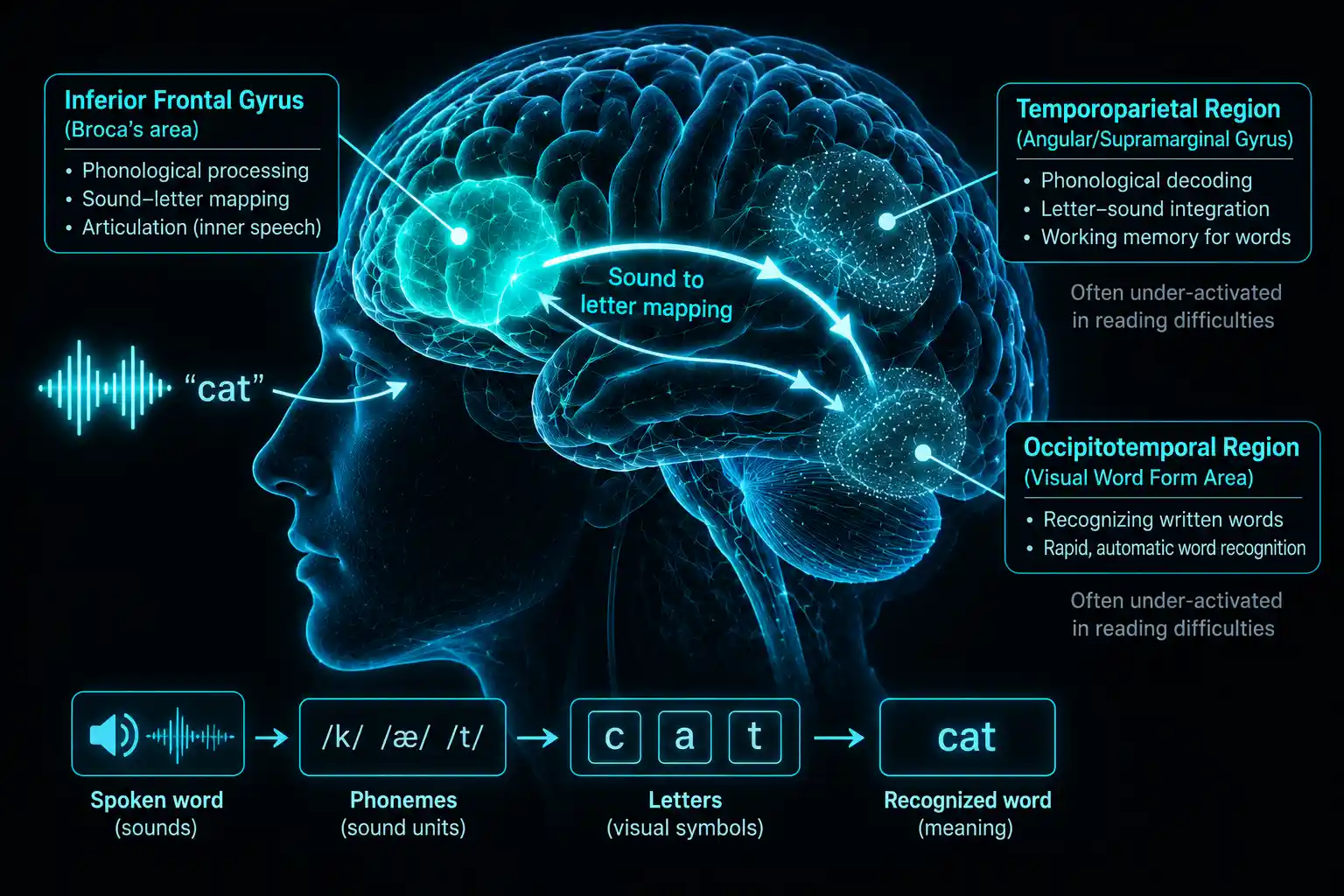
Reading is not an innate ability — it is a cultural invention that the brain assembles from circuits built for spoken language and vision. In skilled readers, a largely left-hemisphere network handles this, including frontal language regions and two posterior systems: a temporoparietal region (important early, for sounding words out) and an occipitotemporal region (the "visual word form area," important for fast, automatic recognition).[2]
Functional MRI studies have identified differences in how these reading-related networks are engaged in dyslexia: during reading tasks, dyslexic readers show, at the group level, a tendency to under-activate the left posterior regions and sometimes to over-activate frontal regions — a frequently observed neuroimaging pattern, first demonstrated directly in a 1998 study.[5][2] These findings are consistent with a neurobiological contribution to dyslexia; however, untangling which neural differences are causes versus consequences of reduced reading experience remains an active research question. Importantly, there is no diagnostic brain scan for dyslexia — these are research-level group patterns, not individual biomarkers.[2]
🧬 Genetics
Dyslexia is strongly heritable and runs in families, with twin and family studies estimating heritability up to around 70%.[12][7] It is a complex, polygenic trait — many genes each contribute a small effect — rather than being caused by a single "dyslexia gene." A large genome-wide association study of over 50,000 adults with dyslexia identified 42 significant genetic loci, many shared with cognitive ability and educational attainment, confirming a highly polygenic architecture that interacts with environmental influences across development.[12][1]
How Dyslexia Shows Up
Dyslexia looks different at different ages, and no single sign is diagnostic. The pattern below reflects features commonly described in the research and clinical literature; a formal assessment is needed to interpret them.[3][4]
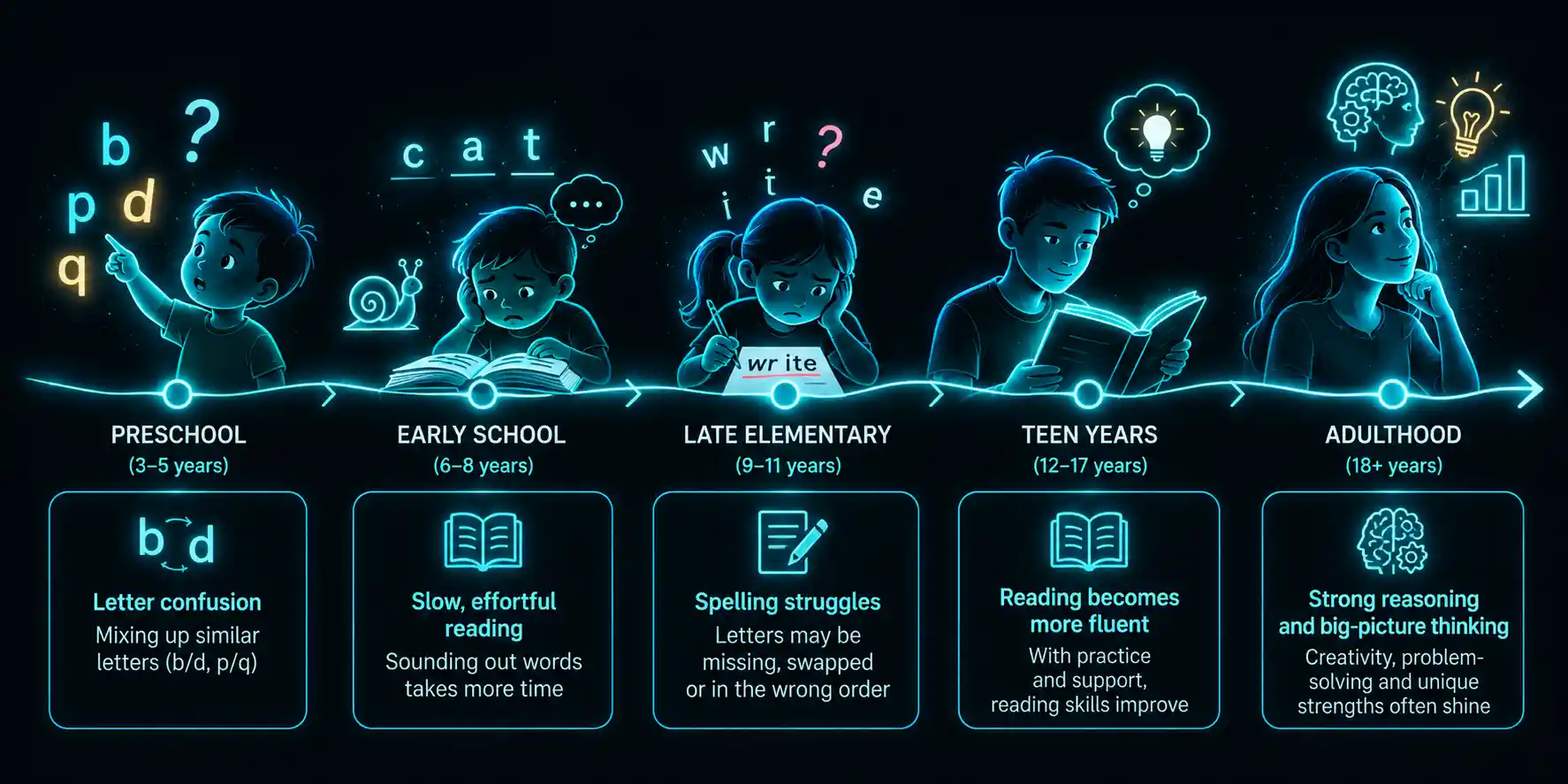
| Stage | Common signs |
|---|---|
| Preschool | Early oral-language difficulties; trouble learning/recalling letter names and sounds; difficulty with rhyming and playing with word sounds; family history of reading difficulty (these raise risk — they are not diagnostic of dyslexia) |
| Early school | Slow, inaccurate letter–sound decoding; difficulty blending sounds into words; may rely on guessing from pictures/context; reading below expectation despite effective teaching |
| Later school | Slow, effortful, non-fluent reading aloud; persistent spelling difficulty; avoidance of reading; strong listening comprehension that outstrips reading |
| Adults | Slow reading and spelling that remain effortful; reliance on re-reading; difficulty with written exams or heavy reading loads — often alongside well-developed reasoning and problem-solving |
🌱 Difficulty that persists despite good teaching
A recurring feature is word-reading and spelling difficulty that persists even with instruction that works for a child's peers, and that is often greater than the person's broader development and opportunity would predict. Note, though, that a formal IQ–reading discrepancy is no longer required to identify dyslexia; modern definitions and diagnostic criteria do not depend on it.[1][9]
How Dyslexia Is Identified
There is no single blood test or brain scan for dyslexia; identification is a clinical and educational judgement based on a full profile. In DSM-5-TR, dyslexia is generally represented under Specific Learning Disorder, with impairment in reading. Diagnosis requires learning difficulties that have persisted for at least 6 months despite targeted intervention, academic skills substantially below what is expected for the person's age, onset during the school years, and clinically significant interference with school, work, or daily life — with alternative explanations (such as intellectual disability, sensory problems, or inadequate instruction) considered.[9]
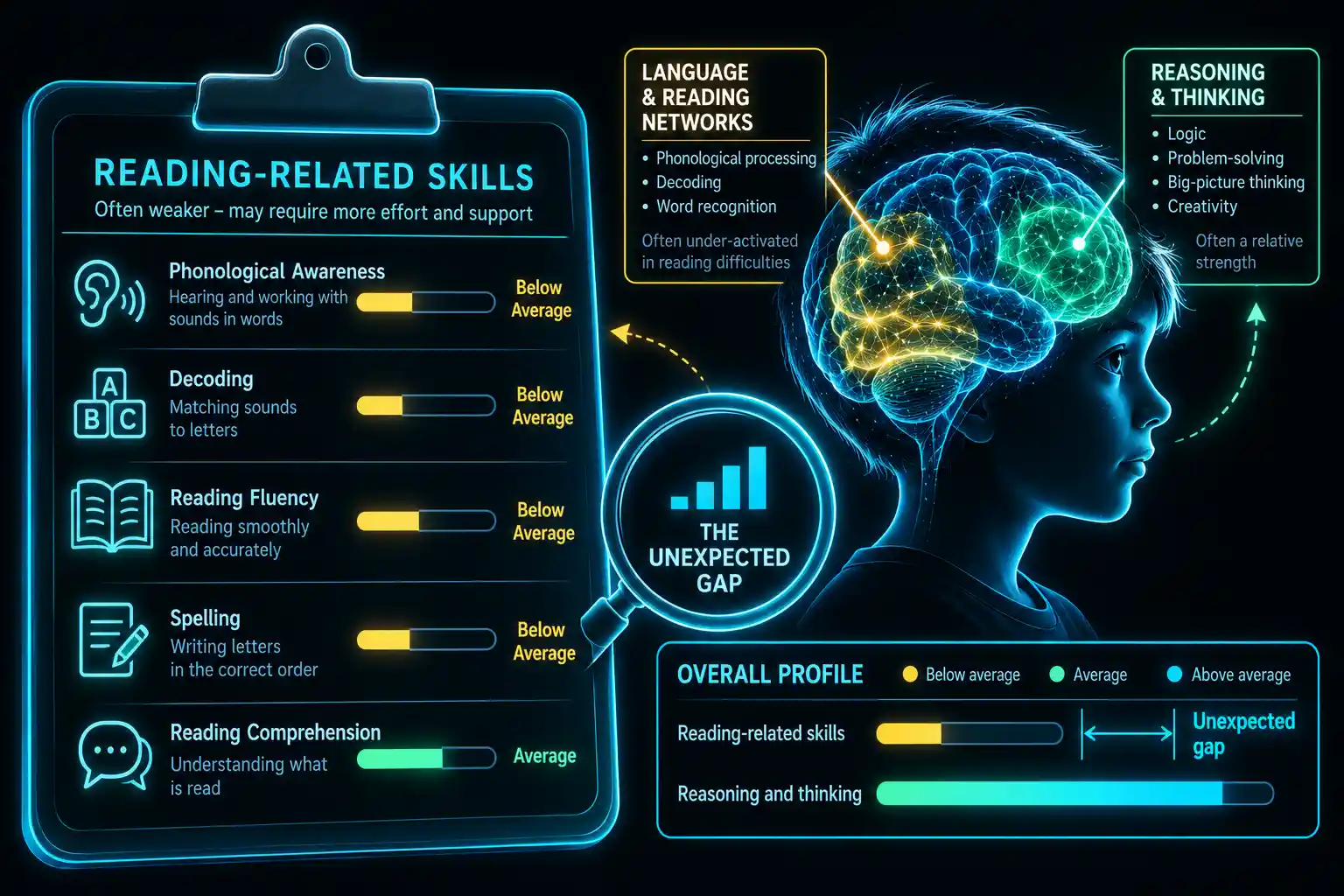
📋 What an assessment looks at
A specialist assessor (often an educational psychologist or specialist teacher) evaluates word reading, decoding of unfamiliar words, reading fluency, spelling, and phonological skills such as phonemic awareness and rapid naming — set against measures of the person's broader reasoning and oral language to build a full profile.[4][3]
✅ Considering other factors
A good assessment also considers hearing, vision, educational opportunity, language background, and other developmental or neurological factors that can affect reading — not to diagnose dyslexia simply by ruling these out, but to understand the full picture and ensure support fits the individual.[9][4]
What Often Travels With Dyslexia
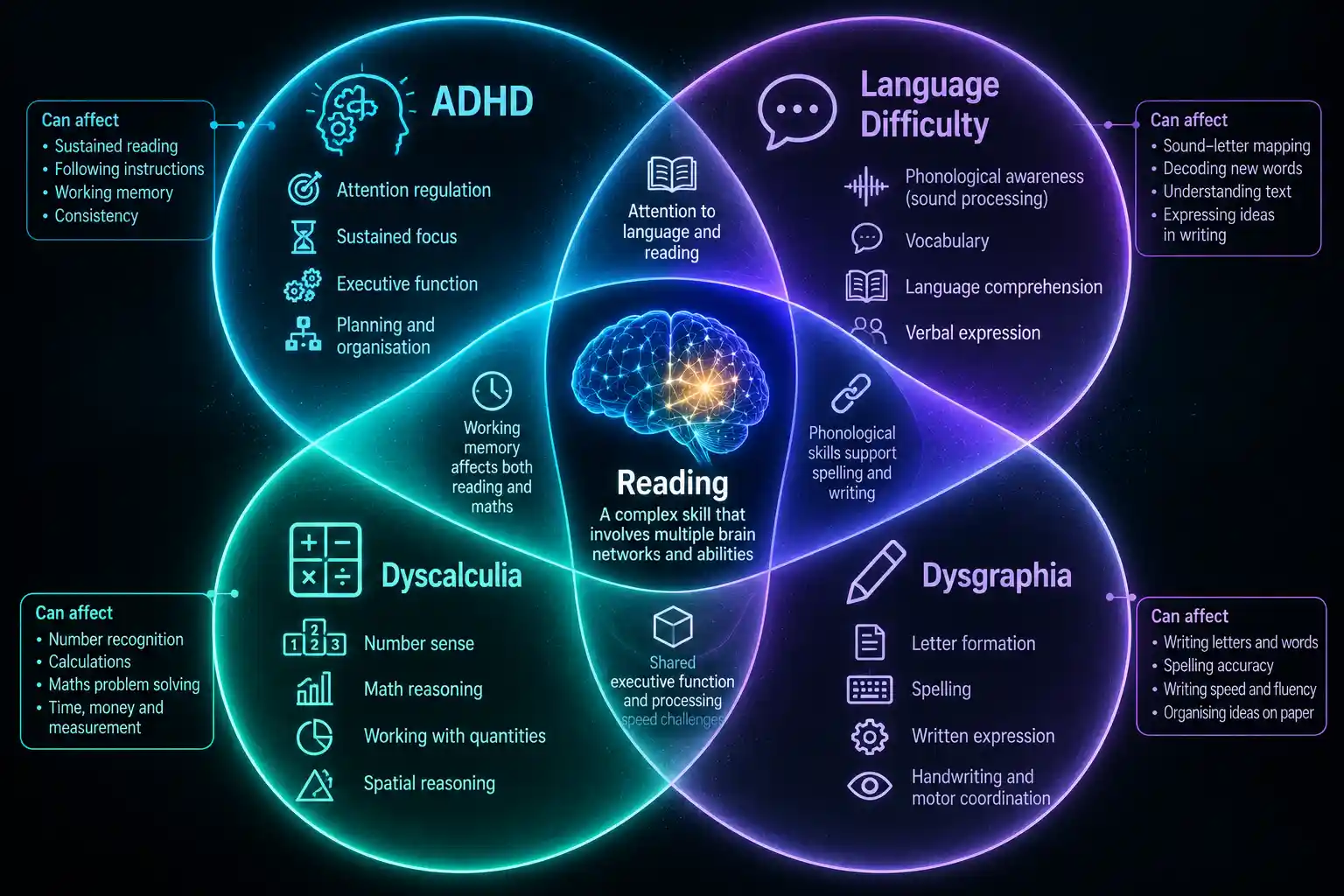
Dyslexia frequently co-occurs with other neurodevelopmental conditions, and overlap is common rather than exceptional.[2]
ADHD
Attention-deficit/hyperactivity disorder co-occurs with dyslexia far more often than chance — commonly cited estimates put the bidirectional overlap around 25–40% — and the two share partly overlapping genetic and cognitive risk factors.[13][2]
Maths & writing difficulties
Specific difficulties with maths (often called dyscalculia) and with handwriting and written expression can appear alongside reading difficulty. Note that "dysgraphia" is used in different ways across educational and clinical settings and is less standardised as a diagnostic category than dyslexia.[9]
Emotional wellbeing
Years of unexplained struggle — and of being misjudged as lazy or "not trying" — can take a real toll, raising the risk of low self-esteem, anxiety, and school avoidance. Timely identification, the right support, and an explanation that makes sense of the difficulty are protective. If low mood becomes overwhelming, please reach out — see Support & Resources below.[3]
What Genuinely Helps
The good news is clear: with the right teaching, severe reading and spelling difficulties can be substantially improved.[8]
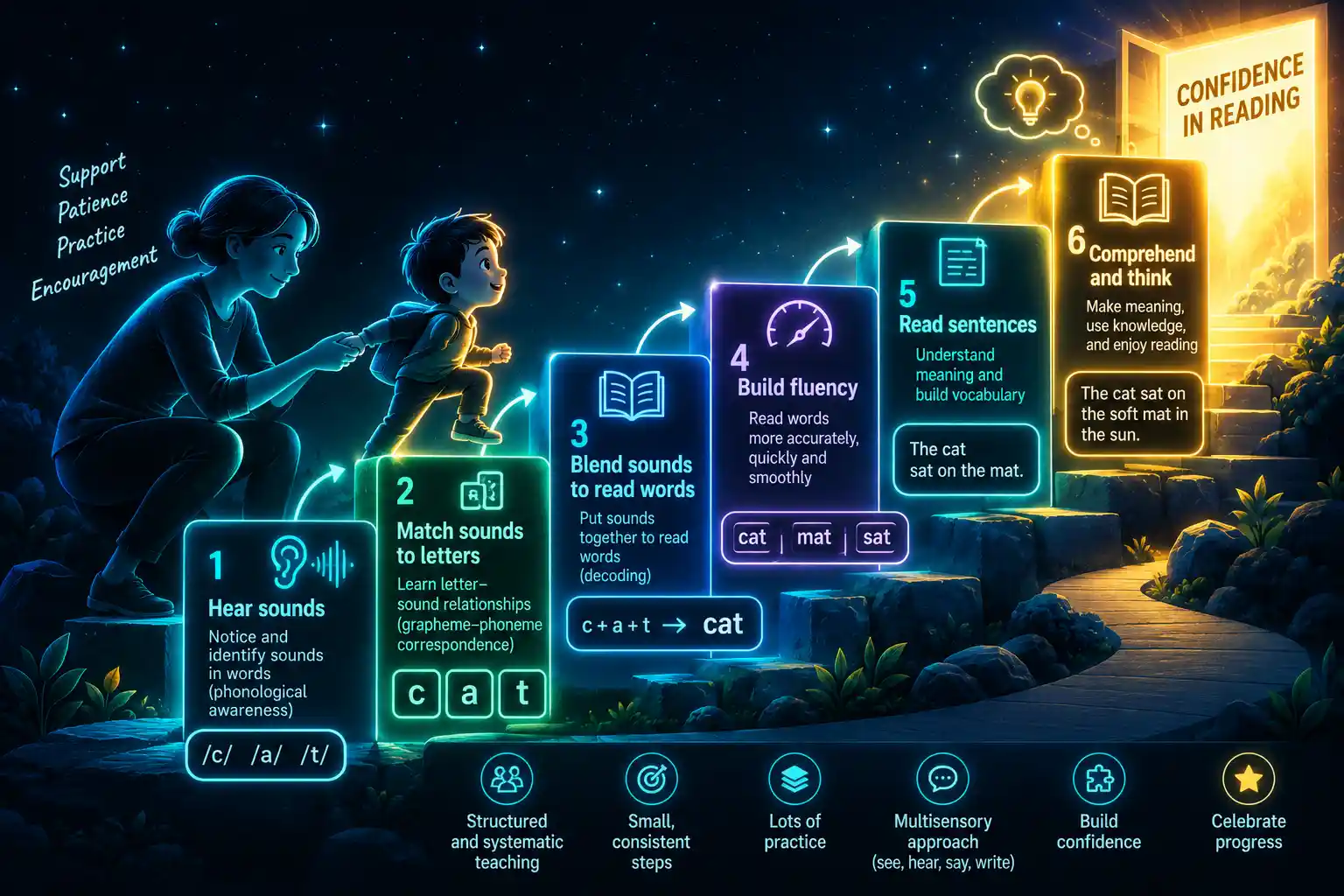
📚 Explicit, systematic phonics
The best-supported single approach is explicit, systematic phonics: direct, sequential, cumulative teaching of sound–letter relationships, blending, and spelling, with lots of practice. In a meta-analysis of 22 randomised controlled trials, phonics was the only intervention category for which statistically significant effects on reading and spelling were demonstrated.[8] Importantly, phonics was also the most intensively studied approach — so this should not be read as proof that every other method is ineffective, only that phonics has the strongest and largest evidence base.
🧱 Structured literacy & programmes
Phonics is usually delivered within a broader structured-literacy framework that also builds phonemic awareness, fluency, vocabulary, and comprehension.[10] Multisensory programmes such as Orton–Gillingham-based approaches apply many of these explicit, structured principles, though the evidence for specific branded programmes is more limited than the broader evidence for systematic phonics. Support tends to work best when it is early, individualised, and sustained.[8][6]
🛠️ Accommodations & technology
Alongside direct teaching, accommodations remove barriers while skills develop: extra time on tests, audiobooks and text-to-speech, speech-to-text, spell-checkers, and reduced copying. These do not "lower the bar" — they let dyslexic learners show what they know. Some dyslexic individuals show strengths in areas such as reasoning, problem-solving, spatial processing, or creativity, but these are not universal features of dyslexia; what is consistent is that, with the right support, dyslexic people can and do thrive in education and work.[3]
🤝 Support & Resources
Trusted, non-commercial organisations with guidance for families, educators, and adults — plus mental-health support if the strain ever feels too much.
If you or someone you love is struggling emotionally or in crisis, please reach out: 🇺🇸 988 (Suicide & Crisis Lifeline) · 🇬🇧 Samaritans 116 123 · or your local emergency number (911 / 999 / 112). You are not alone.
Cited Sources
Key factual claims in this article are referenced to peer-reviewed publications or authoritative organisations. Bibliographic details were verified against the primary sources via PubMed; DOI or publisher links are provided where available. The framing follows the International Dyslexia Association's October 2025 definition (ref [1]).
- International Dyslexia Association. Definition of Dyslexia (adopted 22 October 2025). dyslexiaida.org/definition-of-dyslexia. Scientific basis: Catts, H. W., Haynes, C. W., & Joshi, R. M. (2026). Defining dyslexia: 2025 revision. Annals of Dyslexia. DOI: 10.1007/s11881-026-00363-4 · PubMed: PMID 42053753
- Peterson, R. L., & Pennington, B. F. (2012). Developmental dyslexia. Lancet, 379(9830), 1997–2007. DOI: 10.1016/S0140-6736(12)60198-6 · Free PMC: PMC3465717 · PubMed: PMID 22513218
- Shaywitz, S. E. (1998). Dyslexia. New England Journal of Medicine, 338(5), 307–312. DOI: 10.1056/NEJM199801293380507 · PubMed: PMID 9445412
- Vellutino, F. R., Fletcher, J. M., Snowling, M. J., & Scanlon, D. M. (2004). Specific reading disability (dyslexia): what have we learned in the past four decades? Journal of Child Psychology and Psychiatry, 45(1), 2–40. DOI: 10.1046/j.0021-9630.2003.00305.x · PubMed: PMID 14959801
- Shaywitz, S. E., Shaywitz, B. A., Pugh, K. R., et al. (1998). Functional disruption in the organization of the brain for reading in dyslexia. Proceedings of the National Academy of Sciences USA, 95(5), 2636–2641. DOI: 10.1073/pnas.95.5.2636 · Free PMC: PMC19444
- Melby-Lervåg, M., Lyster, S.-A. H., & Hulme, C. (2012). Phonological skills and their role in learning to read: a meta-analytic review. Psychological Bulletin, 138(2), 322–352. DOI: 10.1037/a0026744 · PubMed: PMID 22250824
- Fisher, S. E., & DeFries, J. C. (2002). Developmental dyslexia: genetic dissection of a complex cognitive trait. Nature Reviews Neuroscience, 3(10), 767–780. DOI: 10.1038/nrn936 · PubMed: PMID 12360321
- Galuschka, K., Ise, E., Krick, K., & Schulte-Körne, G. (2014). Effectiveness of treatment approaches for children and adolescents with reading disabilities: a meta-analysis of randomized controlled trials. PLoS ONE, 9(2), e89900. DOI: 10.1371/journal.pone.0089900 · Free PMC: PMC3935956
- American Psychiatric Association. (2022). Diagnostic and Statistical Manual of Mental Disorders, Fifth Edition, Text Revision (DSM-5-TR) — Specific Learning Disorder (with impairment in reading). Washington, DC: APA. DOI: 10.1176/appi.books.9780890425787
- International Dyslexia Association (IDA). Dyslexia Basics, Structured Literacy, and resources for families and educators. Available: dyslexiaida.org
- Lyon, G. R., Shaywitz, S. E., & Shaywitz, B. A. (2003). A definition of dyslexia. Annals of Dyslexia, 53, 1–14. (The earlier 2002 IDA definition — included as a historical reference; superseded by the 2025 revision, ref [1].) DOI: 10.1007/s11881-003-0001-9
- Doust, C., Fontanillas, P., Eising, E., et al. (2022). Discovery of 42 genome-wide significant loci associated with dyslexia. Nature Genetics, 54(11), 1621–1629. DOI: 10.1038/s41588-022-01192-y · Free PMC: PMC9649434 · PubMed: PMID 36266505
- McGrath, L. M., & Stoodley, C. J. (2019). Are there shared neural correlates between dyslexia and ADHD? A meta-analysis of voxel-based morphometry studies. Journal of Neurodevelopmental Disorders, 11(1), 31. (Notes 25–40% bidirectional dyslexia–ADHD comorbidity.) DOI: 10.1186/s11689-019-9287-8 · Free PMC: PMC6873566 · PubMed: PMID 31752659
🤖 AI Assistance Disclosure: This article was researched and structured with the assistance of Artificial Intelligence (AI) under human editorial oversight. Key factual claims are referenced to peer-reviewed sources, and bibliographic details were verified against the primary literature via PubMed. AI-generated content may contain errors or omissions — always verify information with a qualified professional. Not a substitute for professional advice.
🚫 Non-Professional Authorship: The author(s) and editors at Ocxly Neuro Labs are not licensed medical, psychological, or educational-assessment professionals. This page is an educational synthesis of publicly available literature.